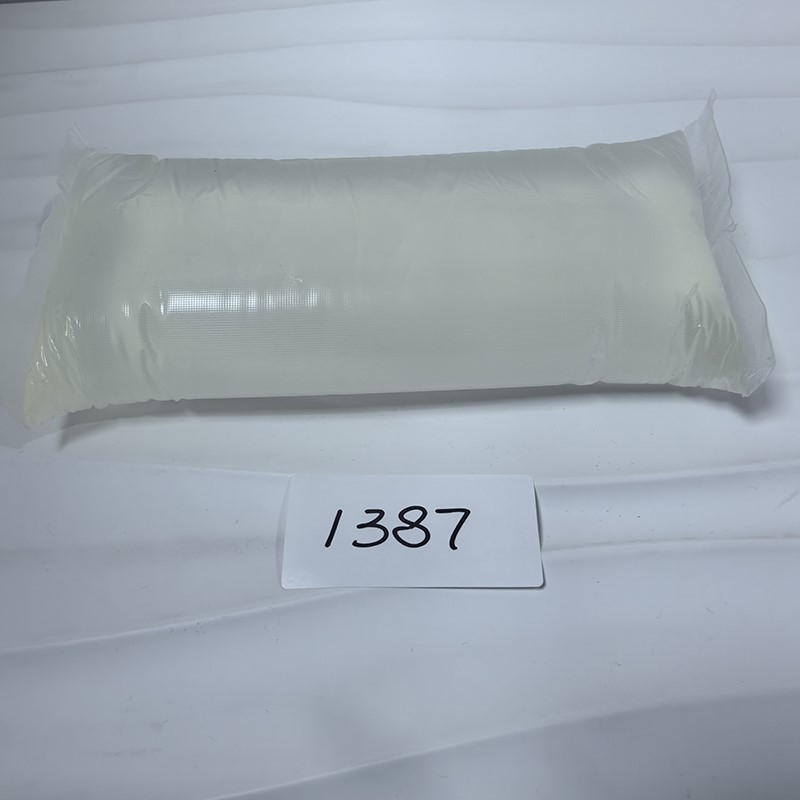
The core principle behind elastic adhesives lies in the application of hot-melt pressure-sensitive technology. This involves melting and coating the adhesive at high temperatures, followed by rapid cooling and setting. Under pressure, it achieves a firm bond with elastic materials, thereby ensuring that the elastic bands remain stable and do not shift, even under complex conditions of use. Its operational process and performance design adhere to the following key mechanisms:
Instant Adhesion Upon Heating; Rapid Curing
The elastic adhesive is a hot-melt pressure-sensitive adhesive (HMPSA) that remains in a solid state at room temperature. During application, it is heated to 140–170°C to melt into a liquid, then precisely applied-via specialized spraying equipment-onto non-woven fabrics or backing films. Upon cooling, it cures rapidly to form a strong adhesive layer. This process requires no solvents and eliminates the need for a drying stage, making it ideally suited for high-speed automated production lines and ensuring exceptional efficiency.
Pressure-Activated, Controllable Bonding
"Pressure-sensitive" signifies that the adhesive's tackiness is activated upon the application of pressure. During the lamination process, roller pressure ensures that the molten adhesive thoroughly wets the surfaces of both the elastic band and the substrate. Upon cooling, this process establishes a combination of physical anchoring and intermolecular forces, thereby achieving a robust bond without compromising the structural integrity of the materials.
High creep resistance, resisting shrinkage forces. Elastic bands themselves are highly elastic and must be bonded under tension during production. The adhesive used for the elastic bands must possess excellent creep resistance to withstand the shrinkage stress of the elastic bands over a long period without slippage or delamination, ensuring structural stability of the product during storage and use.